Aluminium has held the beverage can for decades, and it will keep holding most of it. But three variables moved at once in the last eighteen months: the EU bisphenol ban reached single-use food-contact articles in July 2026, PPWR Article 7 put a recycled-content number on every plastic beverage container sold in Europe from 2030, and food-grade rPET supply started being contracted years ahead of demand. Together they changed the question. It is no longer whether aluminium is the best can. It is whether the can has to be aluminium at all.
Our answer is a plastic beverage can built around the properties of transparent PET — not an imitation of the aluminium can, but a can-format container that runs inside the PET infrastructure a filler already owns. Most of the strategic value sits in that last clause.
What a Plastic Beverage Can Actually Is
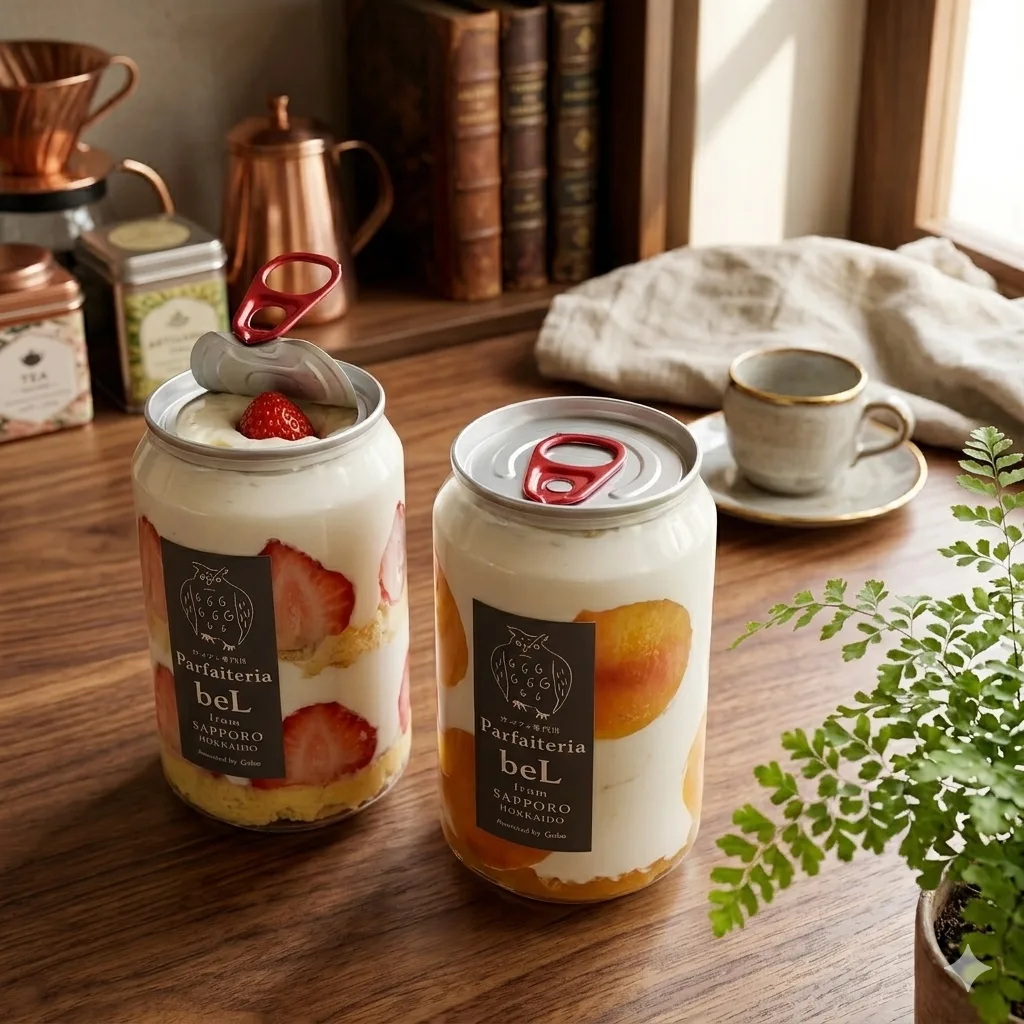
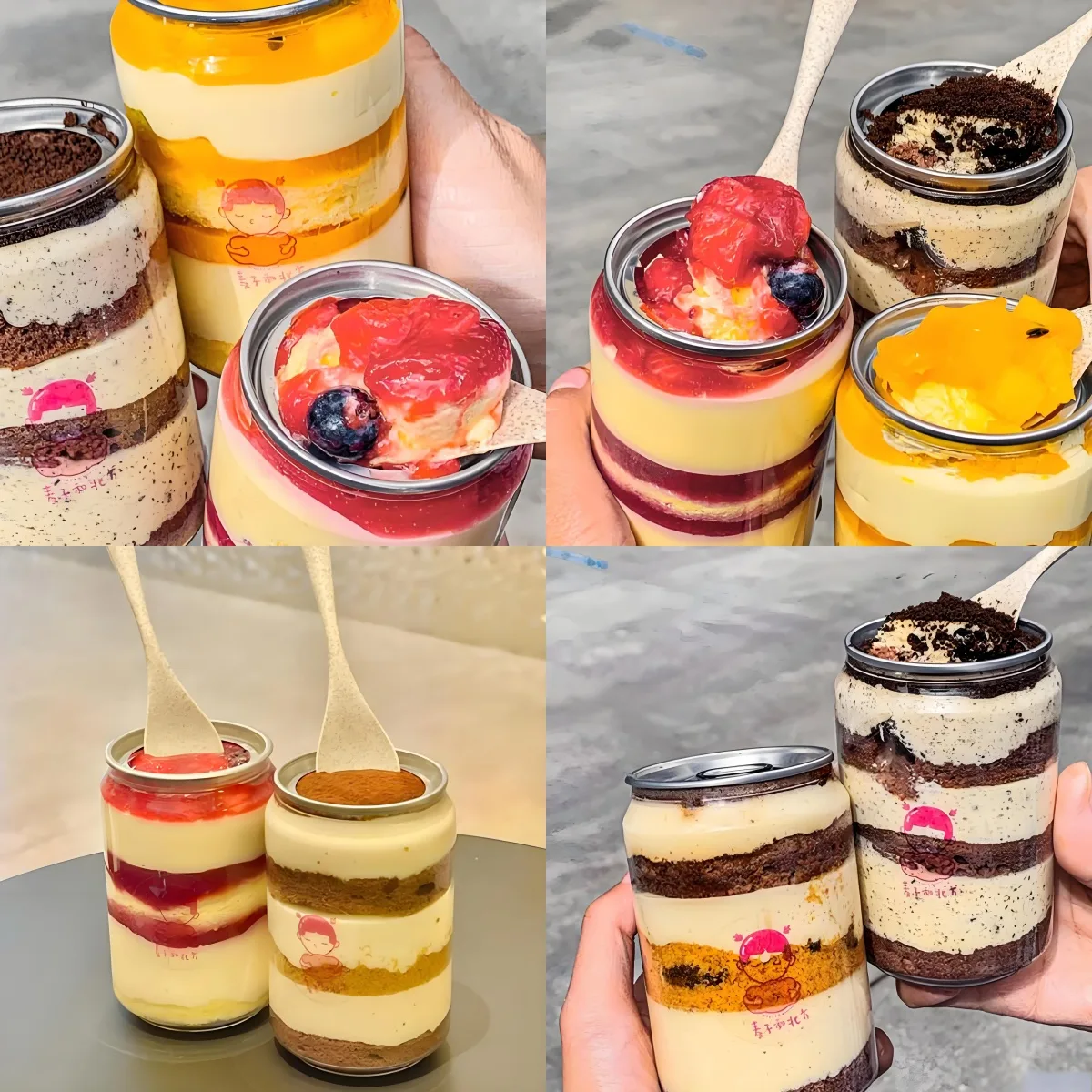
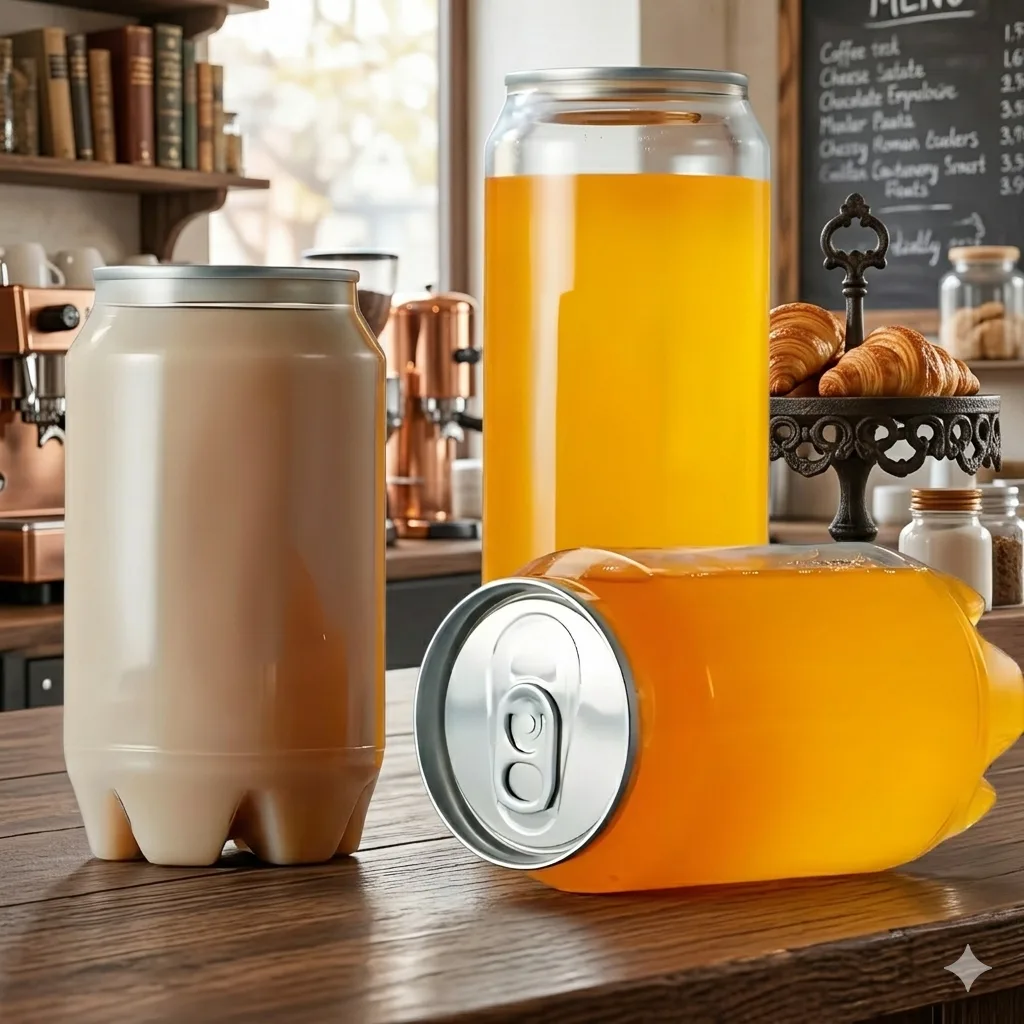
A plastic beverage can is a blow-moulded PET body with a 202 or 206 can finish, closed with an aluminium easy-open end or a PP lid. It is cylindrical, stackable and single-hand grippable, so it keeps the shelf logic of a can while the body stays transparent. The difference from a bottle is the finish and the closure, not the material.
Here is the format range we actually produce, so you can check it against your line before reading the argument:
| Format | Fill volume | Can finish | Closure options | MOQ | Lead time |
|---|---|---|---|---|---|
| Slim can | 180 ml | 202 | Aluminium easy-open end | 200 pcs | 15–25 days |
| Standard can | 150–1000 ml | 202 | Aluminium easy-open end, PP lid | 200 pcs | 15–25 days |
| Wide-body can | 500 ml | 202 | Aluminium easy-open end | 200 pcs | 15–25 days |
| Juice can | 500 ml | 202 | Aluminium easy-open end | 200 pcs | 15–25 days |
Body material is food-grade PET, BPA-free, rated -30°C to 60°C. Custom print, colour and size run on request. Nothing in this table is a projection — it is what leaves the plant. The 202 plastic beverage can is the base format most projects start from, and the slim 180 ml pull-ring can covers the smaller single-serve end of the range.
Temperature Is the Limit, and You Should Hear It First
Our standard cans hold -30°C to 60°C. That covers cold fill, aseptic fill, chilled and ambient distribution, carbonated products and frozen desserts. It does not cover hot fill at 85°C, and no amount of packaging marketing changes polymer behaviour. If your process is hot fill, you need heat-set PET or a different format, and we will tell you that on the first call rather than after the tooling is cut.
Everything else in this article is downstream of that one constraint. It is also the reason the format works so well for the categories that are growing: carbonated soft drinks, cold-brew coffee, RTD tea, juice, dairy drinks and functional beverages are cold-fill or aseptic by default.
The Interior Coating Problem Aluminium Cannot Design Away
Commission Regulation (EU) 2024/3190 has applied since 20 January 2025, but its transitional clock for single-use final food-contact articles ran out on 20 July 2026. From that date, single-use articles manufactured with bisphenol A can no longer be first placed on the EU market — and the regulation names metal packaging coatings explicitly. A narrower carve-out runs to 20 January 2028 for single-use packaging of certain fruit, vegetable and fishery products, and for cans where a BPA-based coating sits only on the exterior metal surface. Filled packaging already on the market may sell through to exhaustion of stocks; unfilled packaging had one year to be filled.
Compliance is verified at a detection limit of 1 µg/kg, and a declaration of conformity has to travel with the product through the chain regardless of whether BPA was used. For a coated metal can, that means proving a negative across the whole interior surface.
A PET body has no interior coating to prove. It is one material from the base to the finish, so there is no epoxy layer between the drink and the polymer, and no bisphenol migration pathway to test for at the 1 µg/kg level. That is not a marketing angle; it is what removing a coating from the bill of materials does to your compliance file.
Two honest qualifications. First, the regulation also covers printing inks and adhesives, which a decorated PET can still uses — those are specified separately. Second, aluminium cans have largely moved to non-BPA interior systems already, so this is not a claim that competitors are non-compliant. The point is narrower and more durable: a format with no interior coating has one less thing to re-validate every time the rules move.
PPWR Article 7 in Numbers
Regulation (EU) 2025/40, the Packaging and Packaging Waste Regulation, sets minimum post-consumer recycled content per plastic part of packaging. The rates are not uniform, and the category a beverage container falls into decides which number applies:
| Packaging category | From 1 January 2030 | From 1 January 2040 |
|---|---|---|
| Contact-sensitive packaging made mainly of PET (excluding SUP beverage bottles) | 30% | 50% |
| Contact-sensitive packaging of plastics other than PET | 10% | 25% |
| Single-use plastic beverage bottles | 30% | 65% |
| All other plastic packaging | 35% | 65% |
Three details matter more than the headline numbers. The share is calculated as an annual average per manufacturing plant and per packaging type, not per unit — so two months of virgin resin can pull a whole year below the threshold retrospectively. Only post-consumer recyclate counts; the pre-consumer regrind a converter loops back into the extruder does not. And the 2030 date is conditional, tied to the implementing act under Article 7(8) — 1 January 2030, or three years after that act enters into force if later. The 2040 rates carry no such condition.
That last point cuts against the usual procrastination logic. The 2030 obligation may slip a little; the sourcing position behind it will not. Food-grade rPET only comes from recycling processes that hold a positive EFSA opinion under Regulation (EU) 2022/1616, and that approved pool is finite. Brands that wait for a confirmed deadline will be buying into a contracted market.
rPET Reality: What We Can and Cannot Promise
Our standard production runs on virgin food-grade PET. That is the honest baseline, and it is what most of our customers in Asia, the Middle East and the Americas still order.
Recycled content is available on request, with conditions. The recyclate has to come from an EFSA-approved super-clean process, because that is the only legitimate feedstock for contact-sensitive applications. It shifts the colour slightly and lowers intrinsic viscosity, which affects top-load and drop performance, so we run a pre-production sample on your mould before a volume order. We will not quote a recycled-content percentage we cannot document to the batch.
What the format does give you is the option. A can built from PET can carry recyclate inside a bottle-to-bottle loop; an aluminium can cannot absorb PCR PET at all, because the material streams never meet. If your sustainability roadmap has a recycled-content number on it for 2030, the container choice decides whether that number is reachable.
The Line, the Preform and the Warehouse
The practical argument for PET is less emotional than the regulatory one. A plastic beverage can runs on PET equipment: the same preform handling, the same blow-moulding logic, the same capping and filling discipline that a bottle line already uses. You are not rebuilding the plant around a new metal format, you are adding a mould and a closure spec.
Storage and freight follow from that. Preforms nest and ship at a fraction of the volume of formed containers, so a filler can hold weeks of capacity in a corner of the warehouse and blow to demand instead of renting space for empty cans. For export markets, that difference shows up directly in landed cost per unit, because you are moving resin geometry rather than air.
Decoration is the other lever. A 360-degree shrink sleeve covers the full body, and metallic or mirror effects are achievable without the coating touching the contents. Because the sleeve goes on after filling, a brand refresh or a limited edition does not require scrapping pre-printed empty inventory — the single most common source of write-off in can-based launches.
Aluminium Can vs Plastic Beverage Can: The Honest Comparison
Aluminium is not the wrong answer. It is the right answer for a different set of constraints, and buyers deserve the comparison rather than a pitch:
| Decision factor | Aluminium can | Plastic beverage can |
|---|---|---|
| Recycled content under PPWR Art. 7 | Metal stream, not a plastic obligation | PCR PET counts directly toward the target |
| Interior coating | Required; must document compliance to 1 µg/kg | None; single-material body |
| Fill temperature | Retort and hot fill supported | -30°C to 60°C; no 85°C hot fill |
| Line change | New format, new seaming and handling | Runs on existing PET equipment |
| Empty container logistics | Formed cans, high cube, low nestability | Preforms nest; blow near the filler |
| Shelf differentiation | Print on opaque metal | Transparent body, liquid is the graphic |
| Barrier to oxygen | Absolute, including light | Requires closure and headspace discipline |
The row that decides most projects is the third one. If your product is retort-sterilised or hot-filled, aluminium is still the correct format and this article does not apply. If your product is cold-fill, aseptic or carbonated, the PET can removes a coating obligation, inherits your existing line and puts the drink on the shelf as the visual.
Who Should Move First
Three buyer profiles get the most from the switch, and one should stay with metal.
RTD and cold-brew producers see the clearest gain. Transparent bodies show the product, sleeves handle the branding, and 330–500 ml formats map onto existing can-filling contracts without a plant rebuild.
Private-label and co-packers gain from preform logistics. Running eight SKUs on one preform family with different sleeves cuts the inventory that a can programme would tie up in printed stock.
Export-focused brands gain from landed cost and from the PPWR story. A container that can carry recycled content is a sales argument in European retail conversations, not only a compliance one.
Retort, hot-fill and long-shelf-life ambient products should stay with aluminium or with heat-set PET in a different format. Saying so early saves everyone a tooling deposit.
On Our Line
We mould PET cans at 202 finish across 150–1000 ml, close them with aluminium easy-open ends or PP lids, and quote the body and the decoration as one specification so print and container are approved together. MOQ starts at 200 pieces for standard sizes, which is deliberately low — a trial run should not require a container load. Lead time is 15–25 days, and we send a pre-production sample for approval before volume, including for any recycled-content request.
If you want to check fit before committing, send the fill volume, the process temperature and the closure you need. We will tell you whether the format works, and if it does not, we will say that too.
Key Takeaways
- The EU bisphenol restriction reached single-use food-contact articles on 20 July 2026, and metal can coatings are named in it.
- A PET can has no interior coating, so there is no bisphenol migration pathway to document at the 1 µg/kg detection limit.
- PPWR Article 7 requires 30% post-consumer content for contact-sensitive PET from 2030 and 50% from 2040; the 2030 date is conditional, the 2040 rates are not.
- Standard production is virgin food-grade PET; recycled content is available on request from EFSA-approved super-clean feedstock, with a sample run first.
- The format is rated -30°C to 60°C. Hot fill at 85°C is out of scope and we say so before tooling.
- Preforms nest, so empty-container freight drops and blowing moves close to the filler.
References
- Commission Regulation (EU) 2024/3190 on the use of bisphenol A in food contact materials — https://eur-lex.europa.eu/eli/reg/2024/3190/oj
- Commission Note for Guidance on the implementation of Regulation (EU) 2024/3190 — https://data.europa.eu/eli/C/2025/6721
- Regulation (EU) 2025/40 on packaging and packaging waste (PPWR), Article 7 — https://eur-lex.europa.eu/eli/reg/2025/40/oj