Picking a beverage package sounds like a straightforward call — until you actually sit down, spreadsheet open, comparing every line item across all three options. Then it gets complicated fast.
Glass has that premium feel, but it’s absurdly heavy. Aluminum is light and classic, but you never get to see what’s inside. And PET cans — a lot of people still write them off as “just plastic bottles.” But in 2026, that’s a mistake. They’re performing better across more dimensions than most people realize.
Let’s skip the fluff and go straight to the numbers.
Weight: The Silent Margin Killer Hiding in Your Logistics Bill
Same 330ml fill. Here’s what each container actually weighs.
| Material | Weight | Shipping Cost vs Glass | Breakage Rate |
|---|---|---|---|
| PET Can | ~25g | Up to 70% less | <0.1% |
| Glass Bottle | ~200g | Baseline | 3–5% |
| Aluminum Can | ~15g | Up to 60% less | <0.1% |
Aluminum wins on pure lightness, sure — but only by a hair. The real point: PET cans capture roughly 70% of aluminum’s shipping cost advantage, and they do something aluminum can’t — let the consumer see the product.
For any beverage brand with an e-commerce channel, this matters enormously. The global PET bottle market reached $678.3 billion, with China representing 32% of worldwide production. A big chunk of that growth is being driven by lightweight packaging rewriting the logistics math for direct-to-consumer shipping.
Shelf Presence: Which Package Sells the Product for You?
| Metric | PET Can | Glass Bottle | Aluminum Can |
|---|---|---|---|
| Product visible? | Crystal clear | Crystal clear | Nope |
| Premium feel | Yes | Very strong | Moderate |
| Social media friendly | Excellent | Good | Not really |
| Full-wrap printing | Yes | Label only | Yes |
Glass still owns “premium” — no argument there. A well-designed glass bottle on a shelf has a weight and presence that’s hard to replicate. But PET cans match glass on product visibility while being dramatically lighter and unbreakable.
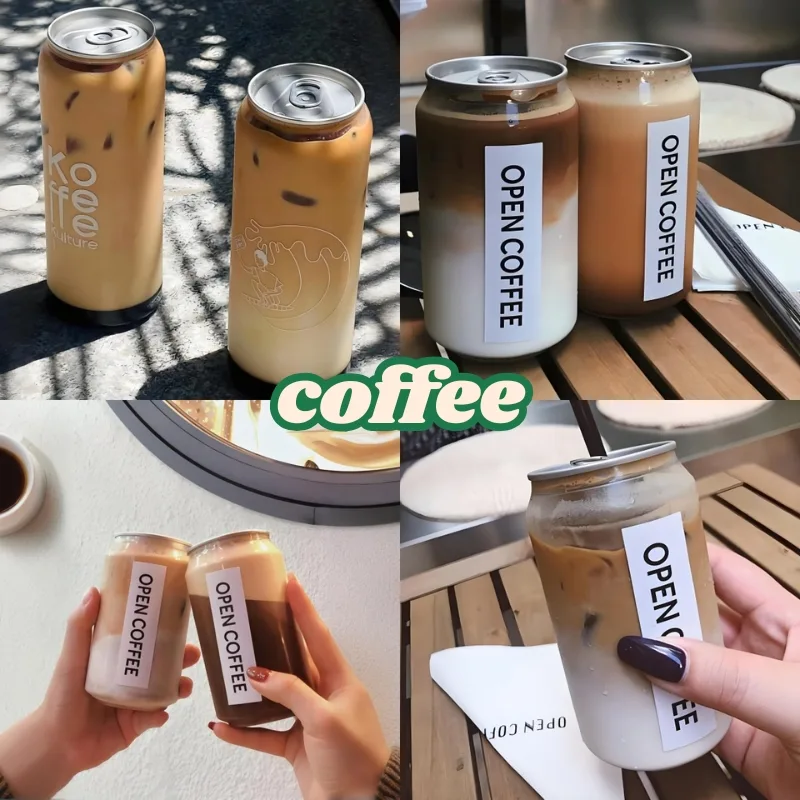
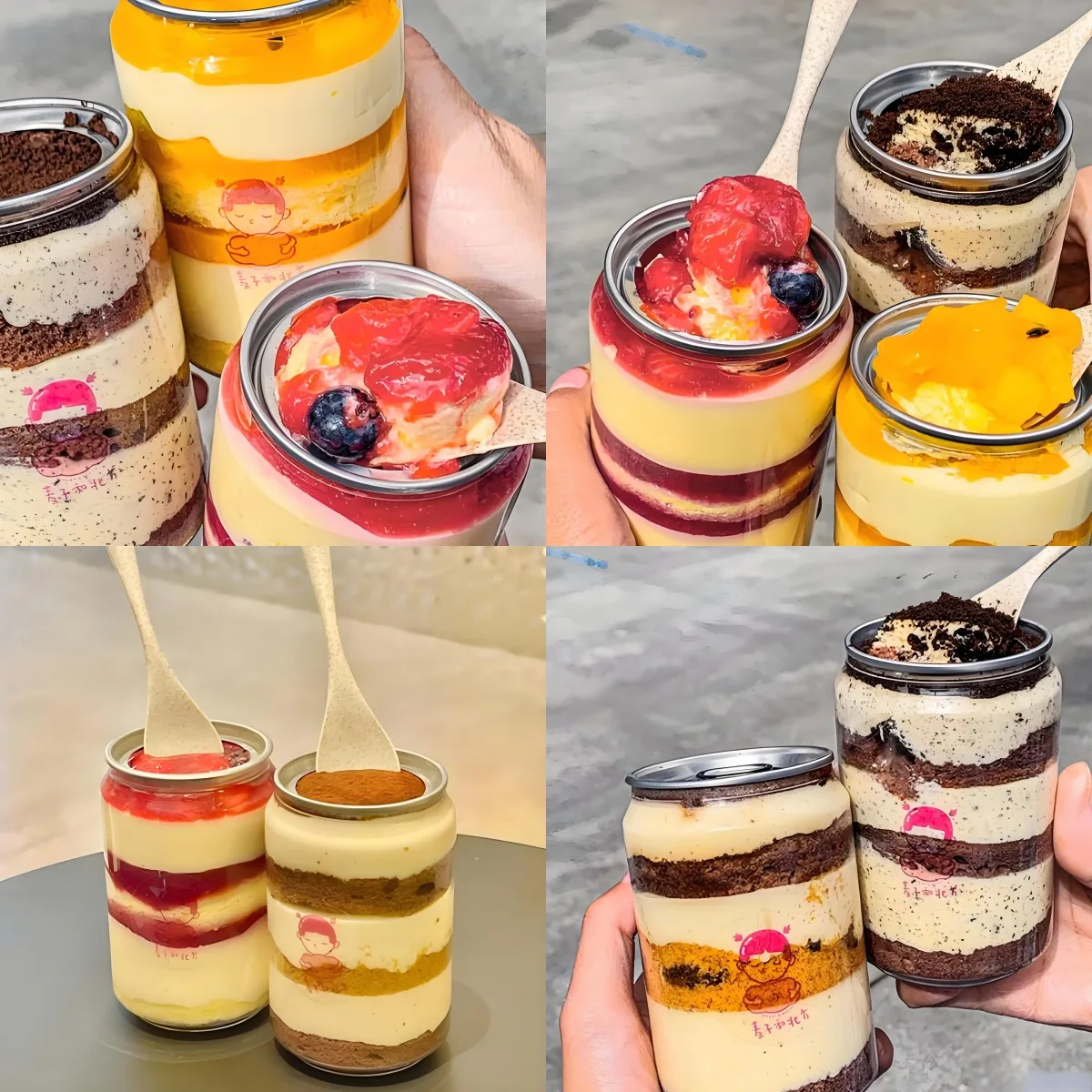
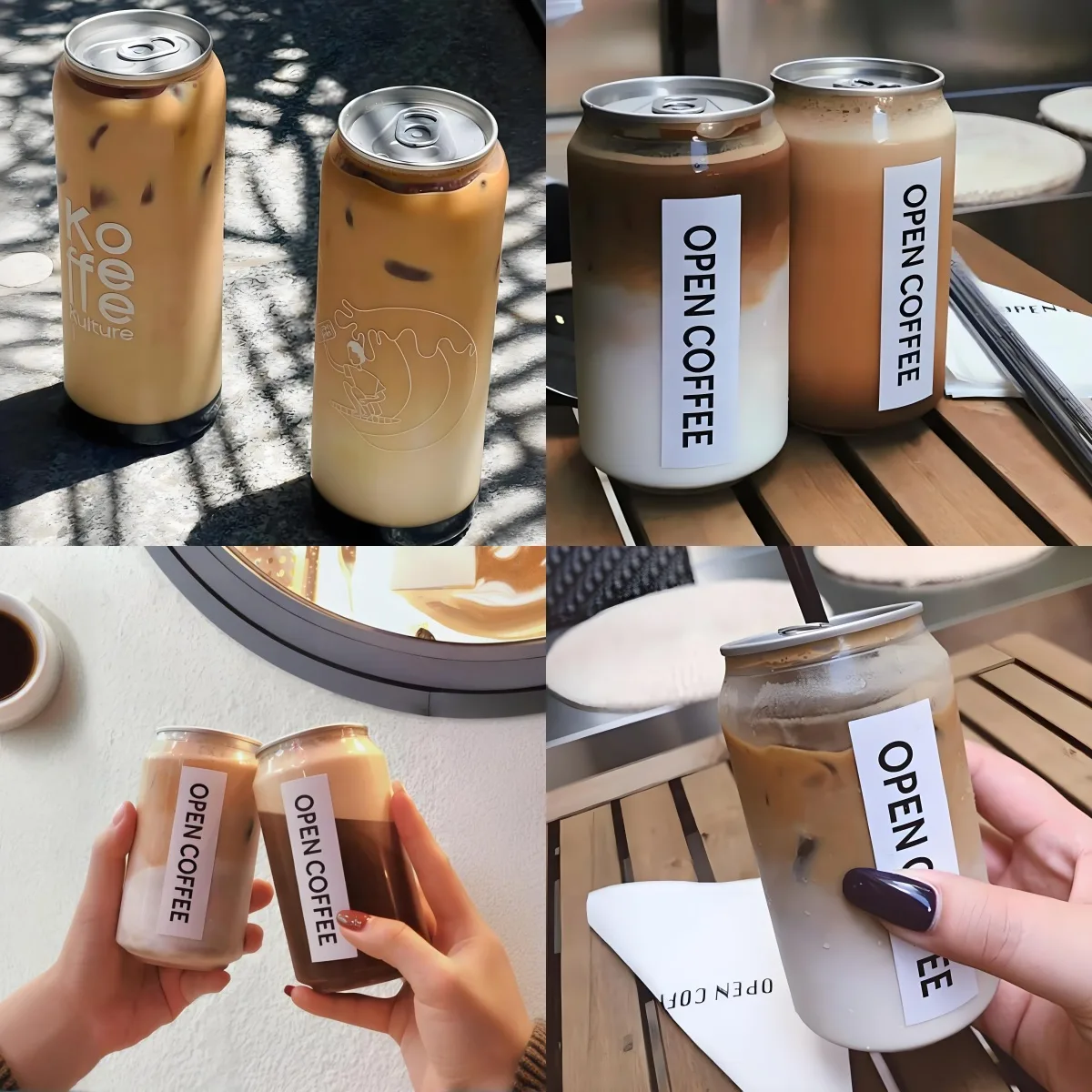
For brands that live on social — think about how your product photographs on Instagram or TikTok. A transparent PET can with layered drink colors, bubbles, and visible ingredients is content that makes itself.
Sustainability: Don’t Get Dazzled by “Infinitely Recyclable”
| Metric | PET Can | Glass Bottle | Aluminum Can |
|---|---|---|---|
| Recyclable? | Yes (#1 plastic) | Yes (infinitely) | Yes (infinitely) |
| Can use post-consumer content? | Up to 100% rPET | N/A | N/A |
| Production carbon footprint | Low | High | Medium |
| Transport carbon footprint | Lowest | Highest | Low |
Glass and aluminum are both “infinitely recyclable in theory” — and that’s true. But two details tend to get glossed over.
First, glass production is enormously energy-intensive. Melting sand requires temperatures above 1,600°C, and the carbon emissions dwarf both PET and aluminum. Add the transport emissions from glass’s weight, and from a full lifecycle perspective, glass carries the highest carbon footprint of the three.
Second, aluminum cans require an interior liner to hold acidic beverages — juices, teas, coffees. Without the liner, the aluminum reacts with the liquid. Some linings contain BPA, which is a topic many brands would rather avoid entirely.
On the PET side, rPET’s carbon footprint is 79% lower than virgin PET. You can run anywhere from 30% to 100% recycled content depending on your brand’s positioning and budget. And with the EU PPWR mandating 25% rPET minimum in 2026 — stepping to 30% by 2030 and 65% by 2040 — the regulatory tailwind is pushing the entire industry toward recycled PET. The transparent rPET market alone reached $7.86 billion in 2026 and is projected to hit $18.44 billion by 2036 at an 8.9% CAGR.
Safety: Shattering Is a Real Problem
| Concern | PET Can | Glass Bottle | Aluminum Can |
|---|---|---|---|
| Shatterproof? | ✓ | ✗ | ✓ |
| Venue-safe (festivals, stadiums)? | ✓ | ✗ (many venues ban glass) | ✓ |
| BPA-free? | ✓ | ✓ | Depends on liner |
Glass is chemically the most inert — no dispute there. But glass breaks, and that breakage has real operational consequences. Many large events, sports venues, and festival grounds explicitly prohibit glass containers. Aluminum doesn’t shatter, but that interior liner is a question mark. PET cans are naturally BPA-free and unbreakable.
Cost: MOQ Is the Real Gatekeeper
| Dimension | PET Can | Glass Bottle | Aluminum Can |
|---|---|---|---|
| Unit price (tens of thousands) | Lowest | Highest | Middle |
| Minimum order quantity | 5,000 units | 10,000+ | 50,000+ |
| Customization cost | Low | Medium | High |
The most underrated number in this table is minimum order quantity.
If you’re a startup or mid-size brand, aluminum’s 50,000-unit minimum can kill your plans before they start. PET cans start at 5,000. For brands still testing formulations, iterating on packaging, and running small-batch trials, that flexibility is a competitive advantage in itself.
So What Should You Actually Pick?
Honest answer: there’s no “best” package. There’s only “best for what you’re selling.”
-
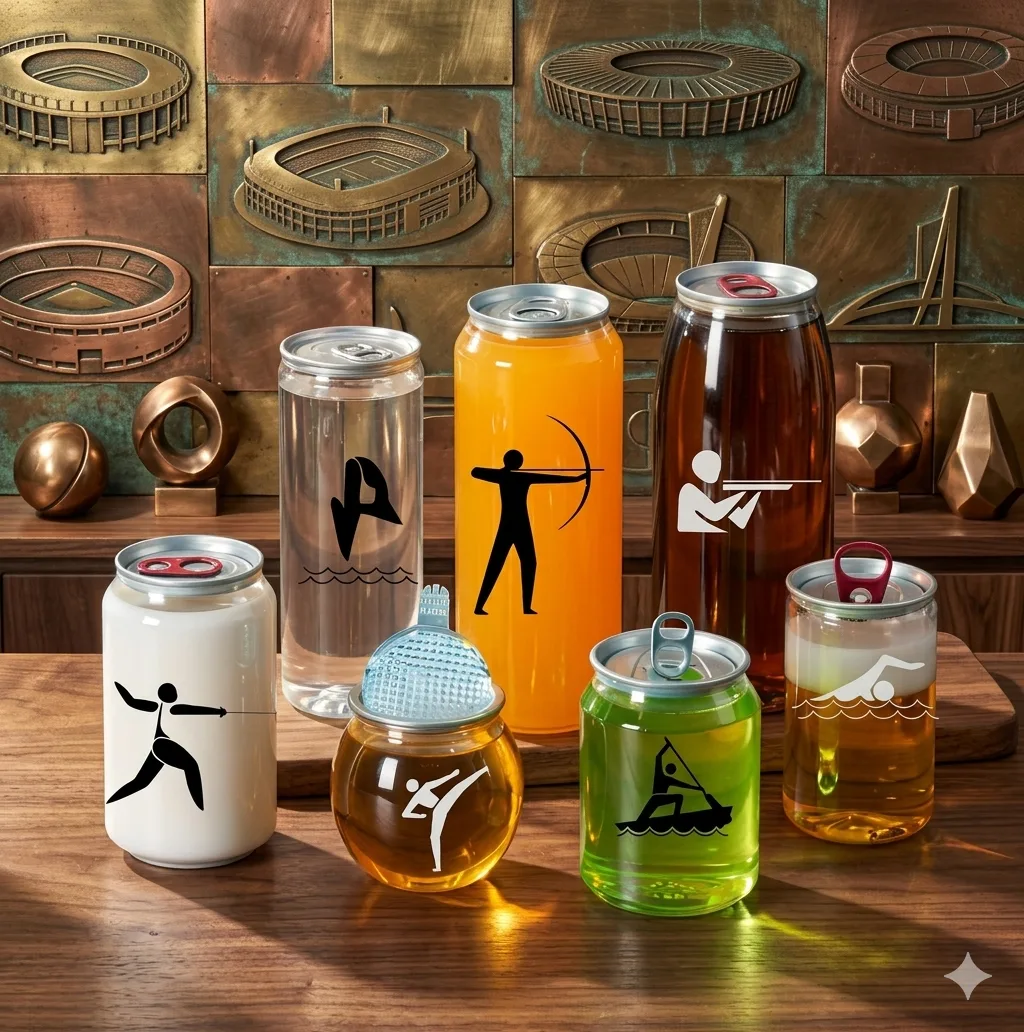
Go with PET cans if your priorities are product visibility, cost control, flexible MOQs, and e-commerce readiness. Milk tea, cold brew coffee, fresh-pressed juices, craft beverages, most RTD drinks — PET cans sit in the sweet spot for all of these.
-
Go with glass if your brand identity is firmly premium and that glass feel is non-negotiable, and you’re willing to absorb the weight and breakage costs. Premium spirits, boutique wines — in these categories, glass’s perceived value premium still justifies the tradeoffs.
-
Go with aluminum if you’re running massive volumes (50,000+ per batch), you need maximum CO₂ retention for carbonated products, and product visibility isn’t part of your selling proposition.
For most beverage brands in 2026, PET cans deliver the best all-around balance. The product is visible. The package doesn’t break. It’s cheap to ship. MOQs are startup-friendly. And you can layer in rPET to tell a real sustainability story — not just marketing.
Browse our PET can product range or reach out and we’ll run the numbers for your specific product.