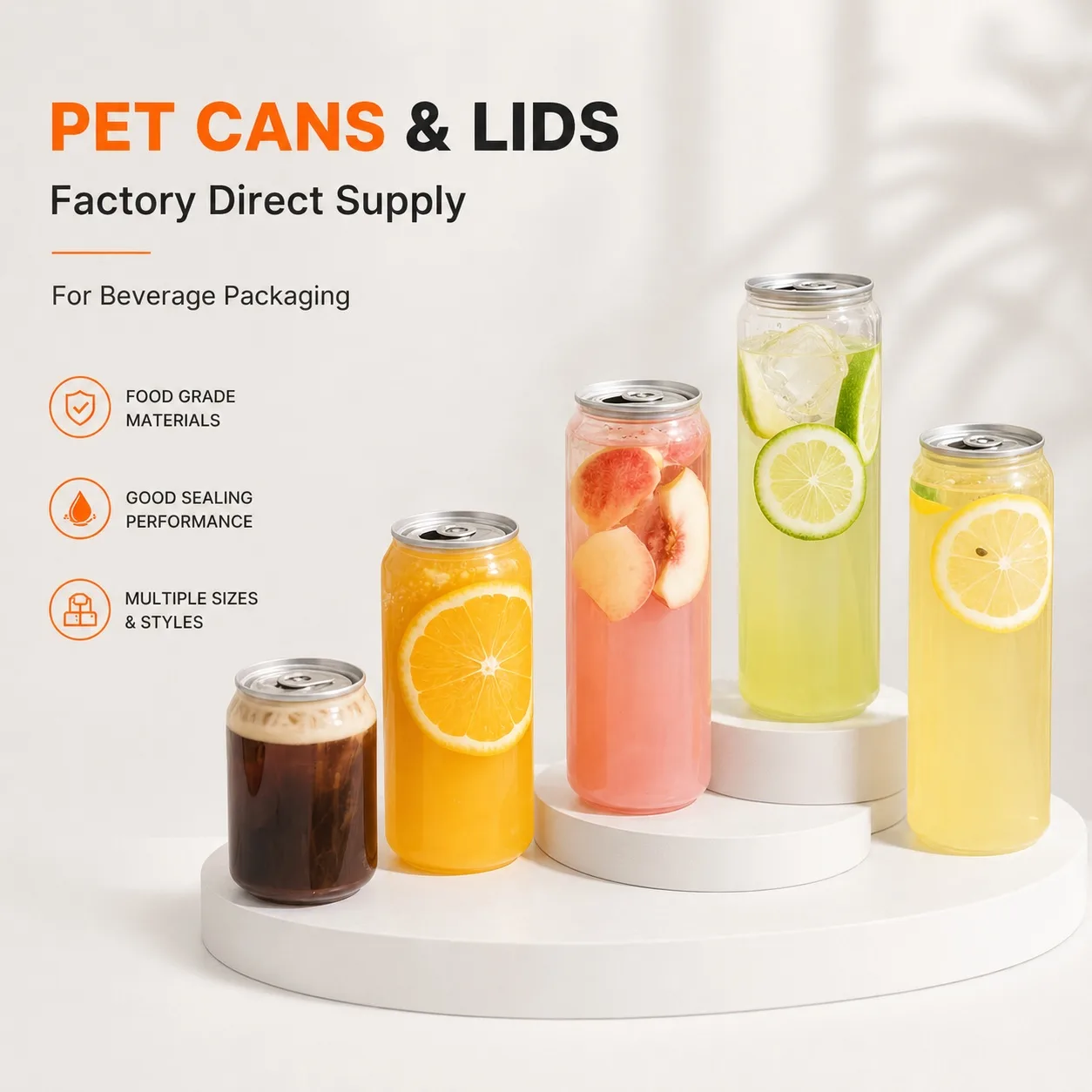
Most ready-to-drink beverages you see in a clear PET can share a detail buyers never notice: the 202 neck finish. It is the threaded opening at the top of the can body — 202 refers to a 2.02-inch diameter — and it is the interface every lid, closure, and filling nozzle has to match.
Why the neck finish decides everything downstream
If the neck is even half a millimeter off, three things break:
- Lids leak or refuse to seat.
- Automatic filling lines jam or spill.
- Your brand’s shelf life becomes a gamble.
That is why we do not treat neck cutting as a subcontractor job. The 202 tooling lives in our own plant, on our own mandrels, calibrated against the lid specs we also produce. When the can body and the lid come off the same production philosophy, the seam is predictable.
What RTD brands get out of in-house tooling
The RTD beverage boom in 2026 is being powered by contract manufacturing — brands commercialize new drinks with lower capital and faster time to market. That only works if the packaging is plug-and-play with their filler. A consistent 202 finish means:
- A new SKU drops onto an existing filling line without retooling the capper.
- Private-label and OEM runs scale from trial to container without re-qualifying the closure.
- Seasonal flavors share one lid inventory.
We cut the 202 neck on cans from 180ml up to 500ml, holding the same dimensions across the range so a brand can run a family of sizes on one lid SKU.
The takeaway for buyers
When you source cans, ask the supplier where the neck tooling lives. If the answer is “a partner factory,” you are one tolerance drift away from a leaky batch. At CHINPK the 202 finish is ours, start to finish.
See our beverage cans or request a neck-spec sheet for your filler.